
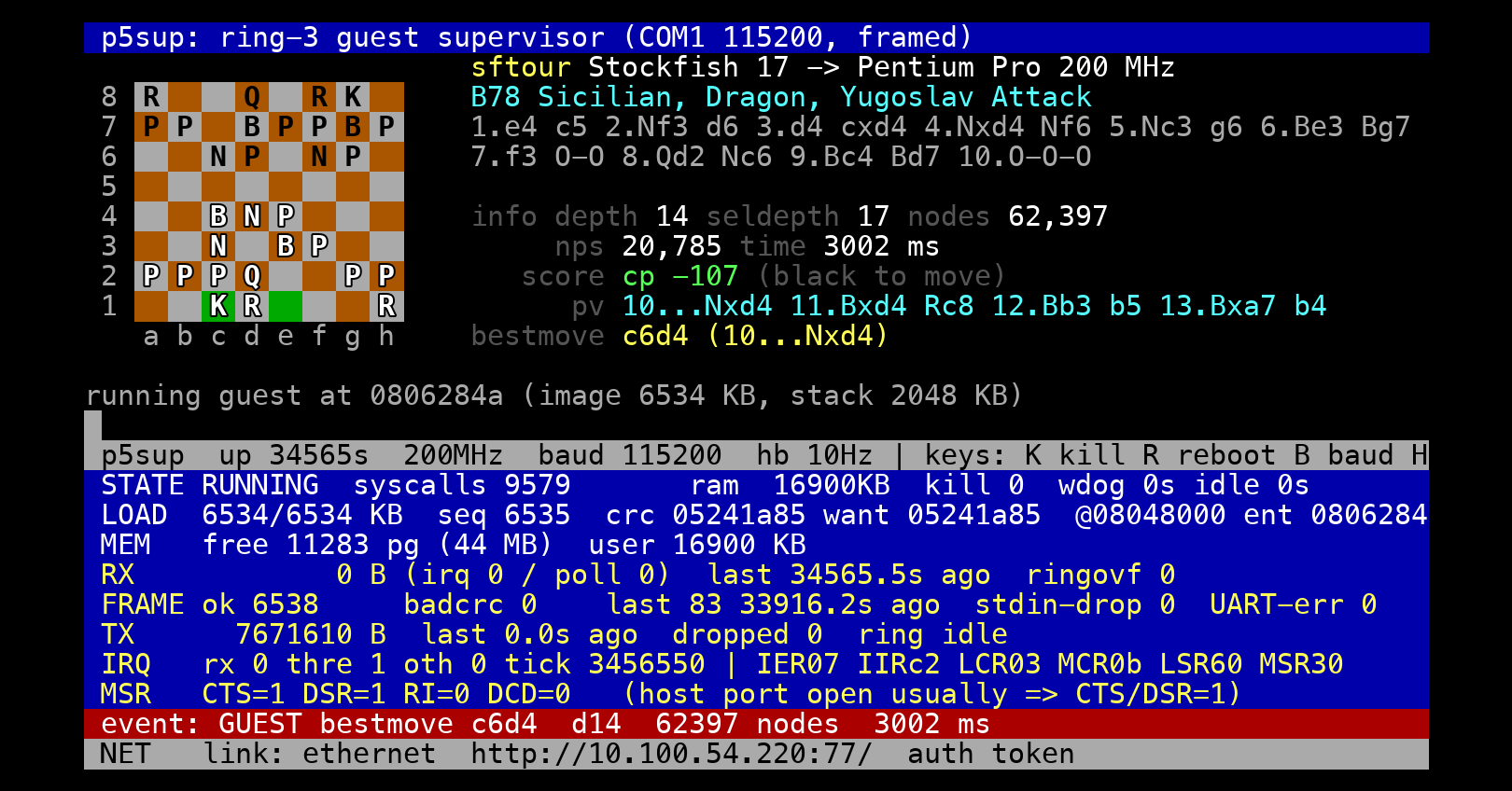
I love this article, and the author goes much deeper than just the Kasparov question.
One fun thing he also looked at was whether a modern chess engine on a pentium could beat a 1996 chess engine on a very powerful modem desktop PC.
The extended TL;DR is a big win for optimization. New software on actual 1995 hardware beats basically everything except new software on new hardware.
Isn’t that obvious? Like processor tech is doing the same thing Turings machine did for the most part just much much faster. Technically you could compute the operations of a chess engine by hand on paper and get the exact same outcome. It would just take… a very very long time. It’s just math.
The only part that’s somewhat supprising to me is that we actually did get more efficient. it feels like for so much of computer history we just rode moores law, and every generation got half as efficient but had 4x the resources to lead to improvement.
Depend if the software is for consumers, or specialized for a task. There is a portion if the industry that push the performance of software to absurd levels… usually so they can cruch more data on the same hardware.
I’m thinking about videogames and server related processing. Not so sure about AI.