This has been a long debate that I had with @[email protected] and I wish to expose this here to add different points of view and enrich the discussion.
Context from my discussion with Multitotal -> https://lemmygrad.ml/post/6440034/5642022
This was a discussion made by multitotal and other people -> https://lemmygrad.ml/post/6447386/5645801
To start, I wish to lay the background of Syria with some sources from my own investigation.
Before the Civil War on 2011
Syria’s economy was worth $68 billion, ranking 68th globally. It was a middle-income economy, on par with Paraguay and Slovenia, and boasted a diverse economic structure with low inflation.
Agriculture, industry, retail, and tourism were pillars of its stability. In 2009, agriculture contributed 22 percent to the economy, industry and excavation 25 percent, retail 23 percent and tourism 12 percent.
Toll of the war
The civil war obliterated this diversity. Agricultural output has plummeted by at least 50 percent, according to the World Food Program. Infrastructure vital to the industrial sector, once concentrated in Aleppo and Homs, has been reduced to rubble.
Oil production, a crucial export for Syria, has collapsed from 380,000 barrels per day in 2010 to 40,000 barrels per day today - a drop of nearly 90 percent.
Tourism, once a burgeoning sector drawing millions of visitors annually to historic sites like Palmyra, has all but disappeared.
Meanwhile, poverty is endemic. The UN estimates that over 90 percent of Syrians live below the poverty line, with more than half facing food insecurity. Inflation is rampant, and the Syrian pound, battered by years of war, has lost over 99 percent of its value since 2011.
How did it begin?
The creation of the Syrian Democratic Forces ->

Source -> https://disser.spbu.ru/files/2023/disser_en_yurk.pdf
Even with the US support, has the material reality improved for the Kurds?
With this, evidence suggests that it has not improved:

Source -> https://disser.spbu.ru/files/2023/disser_en_yurk.pdf
Kurds map 2018 ->
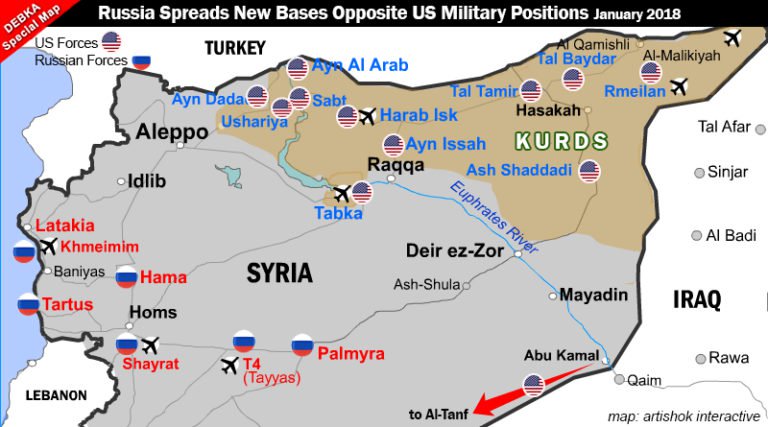
Evidence of US plunder of Syrian oil
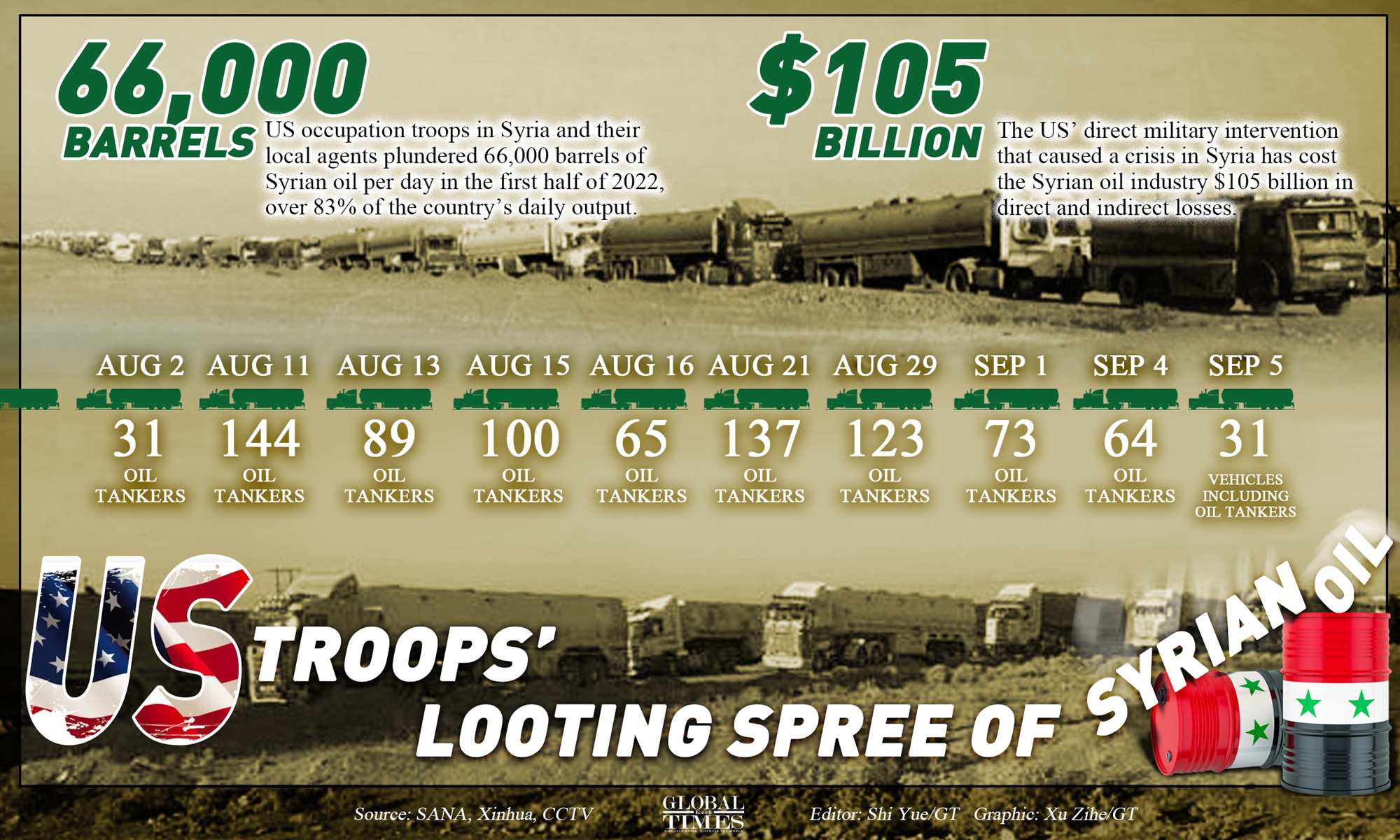
Source -> https://www.globaltimes.cn/page/202209/1274786.shtml
Now, with all of this context, I came to the following conclusion:
Supporting rojava or any other imperialist faction is the same as supporting the continuation of imperialist plunder of Syria. I prefer to advocate for the removal of the imperialist and for the unity of all of the people of Syria.
TLDR I don’t support any imperialist funded faction but Syrian liberation from the imperialists. This means Syrian unity and not balkanization.
Hope to read all of your thoughts on this!!
Their relationship with the US is really tentative. The US is far more invested in Iraqi Kurdistan than anything, because the US actually supports the project of Iraqi Kurdistan, whereas they don’t with Rojava. Instead, Its a weird alliance of convenience that, given other machinations in the region, I just don’t see lasting.
The thing I keep coming back to though, and a thing I see my fellow MLs completely gloss over in discussions of Rojava, is their relationship with Turkey, and Turkish/Kurdish relations more broadly.
Turkey is in many respects an ethno-nationalist political project, founded on the forced assimilation, and ethnic cleansing of, Most famously Armenians, but also Greeks, Kurds, and other ethnic minorities.
Given the splitting of Kurdish homelands across 4 separate countries, the Turkish communist movement has had to grapple very extensively with the Kurdish national question. For instance, On The National Question by Ibrahim Kaypakkaya is all about the National Question as it relates to the Kurds.
One such actor in this had been the PKK, who’s decades-long insurgency has the Turkish state very much on edge, to the point that any Kurdish actor, even the most milquetoast lib ones, get smeared as PKK sympathizers. This extends to Turkey’s continual and ongoing violations of its neighbors sovereignty, going into both northern Syria, and Iraq, to “address PKK terrorism” whether the PKK is actually present or not.
Rojava has repeatedly asserted that it desires to be an autonomous region within a sovereign Syria, and not be an independent state. With its constitution stating: “Syria is a free, sovereign and democratic state”. An independent Rojava would be unable to defend against Turkish invasion.
Speaking of invasions, Turkish backed jihadis are currently taking more Rojava territory in the North west, and have been ethnically cleansing parts of that region for a handful of years now.
If we care about a sovereign, independent, Syria, I think opposing Turkish and Israeli violations of sovereignty is currently key. And if we care about weakening the west, we should consider critical support for a Kurdish polity on the border of NATOs second largest power, I think that deserves our critical support.
And if the US wants to strain relations with a key ally, by continuing to support Rojava to the dismay of Turkey (something I don’t think will happen long term, but hypothetically if that does happen), I say let NATO weaken itself further.