

Radiation
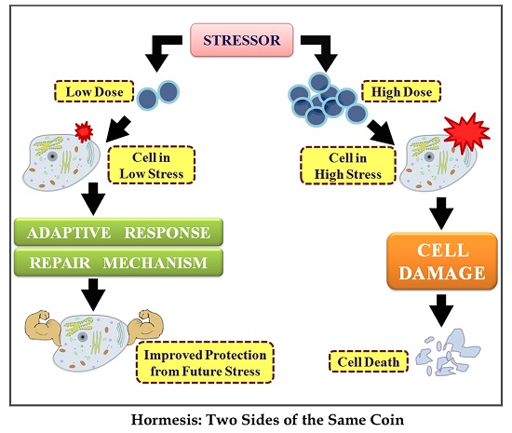
Hormesis has been observed in a number of cases in humans and animals exposed to chronic low doses of ionizing radiation. A-bomb survivors who received high doses exhibited shortened lifespan and increased cancer mortality, but those who received low doses had lower cancer mortality than the Japanese average.
In Taiwan, recycled radiocontaminated steel was inadvertently used in the construction of over 100 apartment buildings, causing the long-term exposure of 10,000 people. The average dose rate was 50 mSv/year and a subset of the population (1,000 people) received a total dose over 4,000 mSv over ten years. In the widely used linear no-threshold model used by regulatory bodies, the expected cancer deaths in this population would have been 302 with 70 caused by the extra ionizing radiation, with the remainder caused by natural background radiation. The observed cancer rate, though, was quite low at 7 cancer deaths when 232 would be predicted by the LNT model had they not been exposed to the radiation from the building materials. Ionizing radiation hormesis appears to be at work.
There is a belief among the people who live near a nuclear test site in Kazakhstan that they’ve become resistant to radiation and in fact leaving the area is more dangerous to them than staying there.
Of course it’s just a coping strategy to these people that live in extreme poverty and have been neglected by the government, but an interesting way to deal with the situation.
Here’s an article if someone wants to read.
I was today years old when I learned that the Children of Atom have a real-life counterpart. Not quite worshipping the radiation, yet, but they might yet get there.
We call it microdosing now
I’ve spent the last few years building up an immunity to iocaine powder.
Beer is on the list! Get in! I knew it was good for me.
I do this a couple of times a day with a neurotoxin called “nicotine”. It feels great!