With the ever-ongoing ‘progress’ of the proposed UK nuclear power plants, I wonder if this is the best course of action (not just in the UK, but across other nations also)?
I would say that the good answer is “mox” (not sure of its english name, but it is likely similar. Used uranium is extremly dangerous for a very long time (millions of years). Yet it could be recycled and used again, and the result would be extremly dangerous for about 500 years (which is still far too much, but less crazily impossible to manage).
We already have enough used uranium to cover the next 200 years of needs, at least… And so it would be a lesser harm for future generation if we use mox than new uranium…
(But the true answer is we need new bombs, so new uranium…)
My understanding is the best answer is ‘all of the above.’ Nuclear is big and expensive, and just as expensive to expand, and has ongoing input costs like skilled staff, water, fuel, etc. but produces very steady, controllable power, and can do so for decades in a well designed and maintained system. Solar and wind, on the other hand, are very easily scaled down to smaller budgets, but generate intermittent power. It can be very useful to have the nuclear as a backup for moments of high demand and low solar/wind output, but very efficient to mostly use renewables because they don’t have much of an ongoing input cost.
Well, don’t forget that wind and solar also use battery systems, not that I am arguing with you at all. I work for a solar power company, and it is really rare that we aren’t contributing to the grid.
When we aren’t, it is because a deer decided to chew up a cable, honest to god. We put up fences: not to keep humans out, but deer.
Seriously, we have a site where the gate is “locked” with a 5’ ethernet cable that has a burnt end. Recycle reuse!
But yes, nuclear is needed as the failsafe.
cable that has a burnt end.
That’s a bad use for good barbeque
I know, I need more copper and plastics in my diet.
This is a good answer.
Nuclear for the base load that can be ramped up/down as needed, and using renewables like wind/solar/hydro as much as possible.
In my country it’s mostly hydro, which is fantastic, but would be even better if we had nuclear as a base load solution and hydro to catch the peaks and for export.
Sadly most people fear nuclear here, so it won’t happen soon.
Hey, I’m in the biz. “Either or” isn’t a thing. We need a completely diversified grid. Mostly nuclear would be ideal with a big chunk coming from solar/wind/hydro. Even fossil fuels have a place in certain applications.
May I ask what you do if you don’t mind me asking?
Mechanical engineer on the operations side of a large Co-Generation power plant. Partially qualified to operate in a nuke plant too, they just don’t exist in my area.
Interesting. What kind of energy sources does your co-generation use? Part renewables, part fossil fuels I presume?
No, all natural gas with number 2 oil (diesel) as a backup. The co part comes from the fact the Brayton and Rankine cycles are working together. The former being how a gas turbine works and the latter being how a steam system works. I can go into more depth but it’s boring. I like renewables, just not as a blanket one size fits all solution. People tend to form an oppinion about this kind of thing based on vibes not reality, experience or math. I’ve worked at hydro plants before and like I said am mostly qualified legally to work in nuclear.
Ah, fair enough.
So the planet’s been using solar and wind for millions of years and it seems to have worked okay.
Yeah, but demand has ramped up, and it seems that wind/solar is no longer able to keep up, unless I’m missing something
I barely see wind and solar adoption. Most roofs don’t have solar yet. Most fences aren’t solar. Terrestrial Wind has better adoption on some scales but still largely untaped as with coastale wind.
wind and solar. hydro is environmentally unfriendly but renewable. nuclear is not pratical long term, or in the short term, since it needs to build out an expensive nuclear plant, plus all the regulatory approval you need to get through, can easily take 10 years at the minimum and also there significant resistance to nuclear power plants being built in many states, plus all the need to hire expensive technicins, scientists to maintain a plant. solar, wind is much cheaper and faster to set up. Most govt is are totally resisting to fast track it. because Oil money is in politicians pockets.
our tech is not even close for things like fusion or even geothermal that is in alot of fantasy scifi genre right now.
when you say “long-run” is it human life expectancy long or heat-death of the universe long?
I mean long run as in however long we are going to need/have/use it, basically. So, until humanity ceases to exist, ig?
wind/solar then. nuclear power requires long-term storage up to 250 years for waste to be safely disposed of. during those 250 years leakage and accidents can lead to environmental impacts.
though wind and solar has industrial waste and environmental impacts through their manufacturing, the long-term effects are manageable when compared to the scale of a nuclear superfund site for the entire longevity of humanity.
this is all assuming there is no further technological developments that would change the nuclear waste to nuclear fuel, as I know there are currently some developing fusion technologies that are using nuclear waste as a fuel to run 100% clean. should those technologies develop further and paired with nuclear power the risks are mitigated and nuclear+fusion become a clean leader of power.
Both are needed for a healthy power structure.
Wind, solar even with batteries have low innertia (actually no innertia at all by themselves). If you want to resist turbulences on the power network without free innertia resistance by turbines (nuclear, gas, hydro), you need expensive equipment to generate that innertia other ways, and it can get quite expensive.
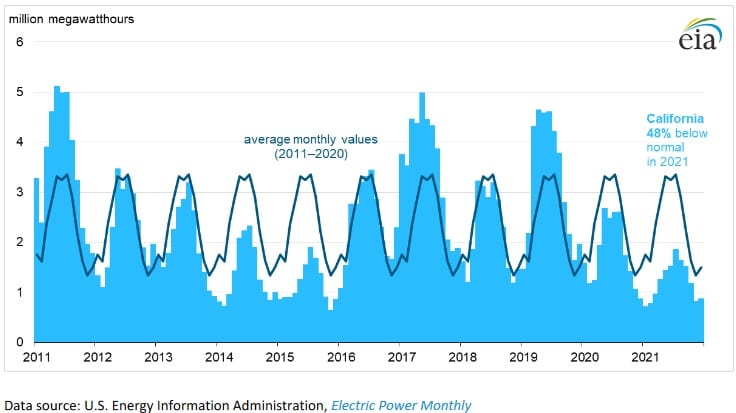
Hydro would be great but it’s highly seasonal.
Hydro would be great but it’s highly seasonal.
how is hydro seasonal? Even coldest Quebec uses hydro year around.
https://enerknol.com/wp-content/uploads/2022/05/EIA_pulse_1.jpg
Example of California hydro generation
The amount of flow you get in a river is dependent on rain/snowpack?
Wind and solar. Pop up, pop down. Nuclear needs entrenched infrastructure. The future is always renewables.
Nuclear’s also too risky in case of a natural disaster (i.e., an earthquake or a flood).
Looks to the East
Isn’t it, Japan?
and hopefully sea
Ok wait what’s the plan for a cold still day? You need a base load supplier like nuclear for renewables to work
You use these things called “power lines” which make it easy to send electrical energy to different places
Could a sworn the other ends of those had to do something - but I guess if you can just get free power from cables, take advantage of that shit girl
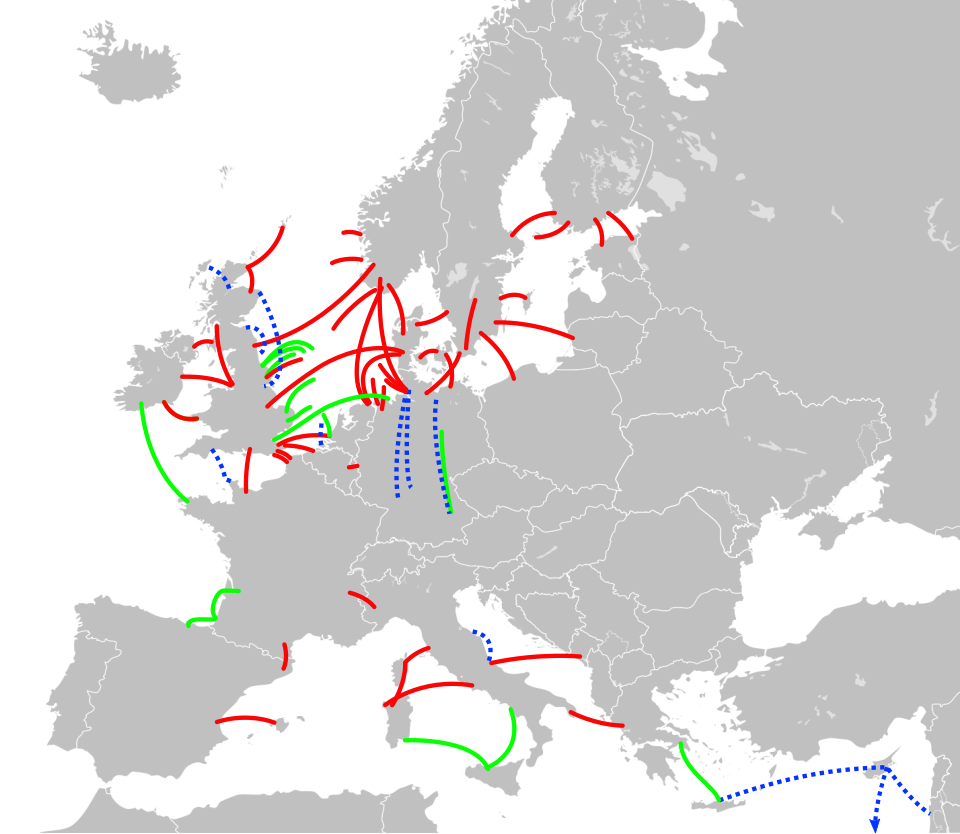
Yes, because Checks notes we should power Great Britain with massive undersea transcontinental cables. Did I get that right?
“Who unplugged the UK?”
Yeah they’re are a couple interesting HVDC lines specifically for that so that renewals can cover a wider range of sun and wind zones.
Honestly still less infra then uranium
Lmao ok
If I remember correctly, it’s about 5 million US dollars per kilometer of overhead high voltage DC lines you run. I’m going to assume that putting those cables under the English channel will cost three to eight times that much being generous.
It depends on the distance actually. It’s the conversion stations that are expensive so as you cover longer distances and able to go even higher in volts the costs per km goes down
No those cables max out at 2GWh. The Britts would only need 45 times the current capacity that currently exists to function daily.
Yet, it seems like there’s always this massive push in the UK to build more nuclear plants, so where (and why) does that idea come from? Is it about quick, cheap energy?
I don’t think anyone would ever describe nuclear energy as cheap nor quick
But it is tunable for grid power, regardless of time of day or weather.
True in terms of set-up, but afterwards, maybe?
Private equity attempting to capture profits. Much harder to do with renewables.
There is currently an absolutely massive buildout of offshore wind atm, (dogger bank a/b , Sofia, east Anglia 3, inch cape, hornsea 3) and solar to a lessor degree. Its just the right media like nuclear as a solution so its talked about more than action taken
China has long term planning so they were happy to give the UK cheap loan deals to build nuclear plants to create work for the Chinese nuclear industry. Then the US started doing an Iron Curtain against China, so to suck up to both the US and China the UK had to buy out all the planned Chinese-partnered nuclear plants. To avoid looking like losers UK politicians insist on trying to go through with building them without China at crippling expense while trying to pretend like it’s not a disaster.
You get a lot more energy for little resources, ignoring the upfront cost. Also the other comment
It depends on a lot of factors, which is part of why the question is divisive. To oversimplify:
On one hand, when done optimally, nuclear provides huge amounts of power extremely cleanly and safely - even compared to renewables. There is also a number of options that could allow for significantly reduced costs and significantly increased flexibility such as SMRs, or other reactor technologies. On the other hand, nuclear has a mountain of roadblocks in front of it including antinuclear sentiment, policy blocks (particularly stemming from that sentient), and a lack of know-how increasing cost and slowing both building of reactors and development of new technologies. This means it could be amazing in the long term, particularly in regions that are suboptimal for renewables, and for industries requiring large amounts of power 24/7, but it can’t do much in the short-term.
Renewables meanwhile, are cheap, fast and easy to build and easy to expand to the point where until ideal conditions, even individuals can afford to install and run their own electrical infrastructure. As such, its amazing to quickly reduce prices, reduce emissions, and reduce dependence on governments. On the other hand, most renewable options lack flexibility. Solar only runs half the day, and the further you are from the equator, the lower the efficacy. Wind takes up huge amounts of space. Hydro requires damable rivers and space to avoid destroying ecosystems. There’s lots of options, but they also have large limits. As technology improves these will limits will be reduced (such as improving battery technology) but they are still present.
Ultimately, this means that where available, renewables are nearly always best in the short term. Long term, it gets messier, since it depends on what we invest in now, which technologies end up going somewhere versus being dead ends, and how the world changes in general. Most predict a mixed approach would be best, both to address the variety of global needs, and to spread risk. All that said, global warming is, at this point, a short-term problem. We can’t afford to focus on the long-term anymore, which is why there is so much focus on renewables. We need to be replacing and expanding infrastructure yesterday so we don’t have time to wait for nuclear, and debatably, can’t afford to be investing in an energy technology that won’t pay off for decades when that could be further invested in renewables.
I think that part of the antinuclear sentiment, while it’s in part irrational, has something to do with a very rational fear: whe have longly seen the devastating effects of nuclear accidents. From Chernobyl to Tōkai-mura, and from there to Fukushima.
While theoretically the human risks are reduced to almost zero, the natural risks hadn’t run the same luck.
Also, I feel that for the renewables, one big deal that we’re missing are the microenergy leaks (although in Japan they’re already beginning to take advantage of these, with for example piezoelectric roads, or water heating systems that at the same time generate residual electricity, or Peltier heaters and/or coolers that as they acclimatize also generate complementary amounts of energy).
My problem, honestly, is that I’m watching society collapse around me and I absolutely do not trust government regulators to do their job TODAY, much less in the Max Max Headroom future.
Wind & solar for sure. Nuclear fission is great right now, but fissile material is a finite resource. It will, like oil, eventually become too expensive to extract.
and watch what China will do, they will invest in uranium mining and monopolize it and idiot west will just watch them do this, again.
Nuclear has a problem. Right now, there is an estimated 90 years of potential uranium supply, which will be cut in half when Chinese reactors get on line. Uranium is not abundant.
And don’t flame me with thorium bullshit or uranium from seawater bullshit. Science fiction.
What do you mean science fiction? Commercial thorium reactors exist since 1962. They just require more investment per watt of power, and don’t produce much of useful byproducts (it’s not all just waste with uranium cycle), which is why most places opted for uranium as long as there’s plenty enough to go for now.
Also nuclear waste
Not an issue
I agree we will just keep it at your house
Yum
It is not science fiction, you can get uranium from seawater today. It costs 2 to 4 times more than land mining today. The fact is that uranium is a small part of the cost of energy for nuclear so that translates in 5% to 10% more cost on the price of energy.
This without fast breeder reactor that reuse uranium from other reactors. And those exists today (Russia bn-600 and bn-800 for example)
We have 90 years to solve a problem we solved already today. This is not an issue at all.
Nuclear was probably the best choice in the 1970’s; France made the best choice. But we’ve seen over and over again the problems are getting worse rather than better. Paperwork and process ever more unwieldy. Construction taking longer and longer. Radioactive waste building up with no permanent disposal. By far the highest cost power generation, and the difference is getting wider.
Much of the posts about how great it will be this time is just astroturfing by those trying to profit. No, “small modular reactors”, didn’t solve the cost, construction, or process issues, but only raised the cost of generation. No, thorium isn’t the silver bullet and really doesn’t exist yet.
Paperwork and process ever more unwieldy. Construction taking longer and longer.
Not with SMRs and portable reactors. Ontario will have 4 online with 6 years lead time. Fraction of the cost and time of a full CANDU build. Thorium is as real as the Stark arc reactor or fusion.
It seems like battery+solar is the cheapest worldwide as of recently.
I am not familiar with UK conditions. Scandinavian winters remain a problem for solar.
IMO, GB needs to lean into its nuclear strategy. A decade out of Brexit, they have the speed of sovereignty but will come crawling back to the EU and get terrible terms for readmission if they don’t do something productive. The endless debate of “which is best” will ruin the country.
GB signed a contract will Rolls Royce to build SMRs, they need to deliver on time and on budget. Once those factories and workers are turning, GB would be in a great position to buy more SMRs and plug em into the grid and export power to the EU, export SMRs to the EU (esp France, they love nukes), and export energy intensive commodities to the EU (like steel or cement)
Wind and solar are great, no question there. However, the endless debate of this burns oil, gas, coal, and public sentiment.
If the area has good and reliable access to the sun or strong winds, solar and wind will be cheaper.
If it doesn’t, nuclear is there to have your back.
Also, you can put a nuclear power plant on a ship (like Russia and China do) and deliver nuclear power to coastal areas while the proper infrastructure is (re-)built.
There is no universal best way to produce power, you need to mix and match to make a good grid.